A good cheesecake and brownie cake should give you two textures in every forkful: a dense, chocolatey brownie base and a cool, tangy cheesecake layer. The challenge is that sugar does more than make dessert sweet. It helps brownies stay moist, encourages browning, and gives cheesecake a smooth, tender finish. Remove too much without replacing its structure, and you can end up with a dry brownie and a rubbery topping.
My version uses less sugar, not no sugar, because dessert still needs to taste like dessert. The result is rich enough for a birthday table, but the sweetness does not overwhelm the cocoa or cream cheese. I serve small slices with fresh strawberries or raspberries, which add brightness and make the cake feel festive without requiring extra frosting.
Why this combination works
Brownies and cheesecake balance each other naturally. Cocoa brings bitterness, butter adds richness, and cream cheese contributes acidity. That acidity is useful: it keeps the cheesecake from tasting flat when the sugar is reduced. A little vanilla rounds out the flavor, while espresso powder makes chocolate taste deeper without making the cake taste like coffee.
For the brownie layer, I use 1/2 cup granulated sugar plus 1/4 cup allulose in place of a more typical 1 cup or more of sugar. Allulose browns and retains moisture more like sugar than many granulated alternatives, although it can make the edges soften after chilling. If you do not use allulose, replace it with 1/3 cup additional granulated sugar for a sweeter, firmer result. Stevia alone is not a good structural substitute here because it contributes sweetness but no bulk.
The cheesecake layer needs a different approach. Sugar helps loosen cream cheese and protect its delicate texture, so I reduce it moderately rather than aggressively. Six ounces of softened cream cheese, 1/3 cup plain Greek yogurt, one egg, 1/3 cup sugar, and vanilla make a creamy topping that slices cleanly after chilling. The yogurt adds tang and a little protein, but it should not replace all the cream cheese or the layer will taste more like baked yogurt than cheesecake.
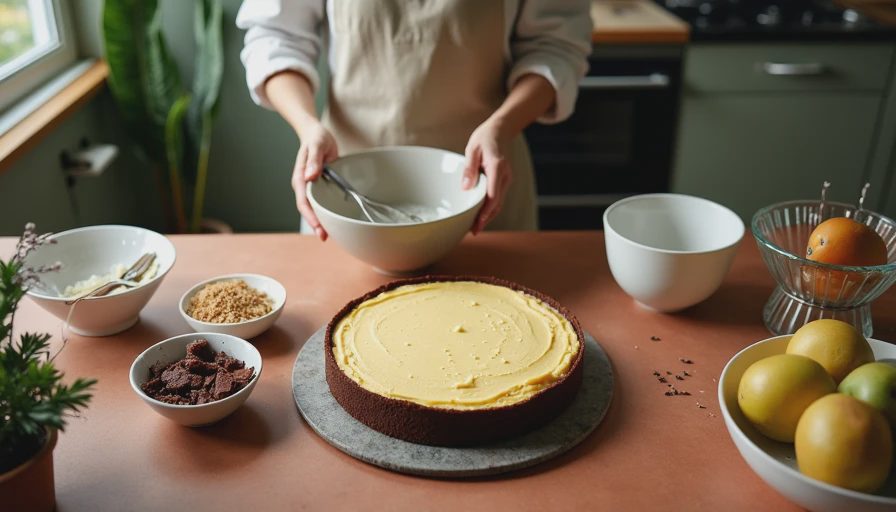
How to build the cheesecake and brownie cake
Start with an 8-inch round springform pan. Grease the sides and line the bottom with parchment. An 8-inch square pan also works, but the slices will look more like bars. Heat the oven to 325°F, which is gentle enough for the cheesecake layer and still hot enough to set the brownie batter.
Melt 6 tablespoons unsalted butter with 3 ounces chopped dark chocolate. Stir in the granulated sugar, allulose, 2 large eggs, 1 teaspoon vanilla, and 1/2 teaspoon espresso powder. Fold in 3/4 cup all-purpose flour, 1/3 cup unsweetened cocoa powder, and 1/2 teaspoon salt. Mix only until the flour disappears. Overmixing develops gluten and can turn a fudgy brownie layer cakey.
Spread about two-thirds of the brownie batter in the prepared pan. For the topping, beat softened cream cheese until smooth, then mix in Greek yogurt, sugar, one egg, vanilla, and 1 tablespoon flour. The flour is not there to make the cheesecake bready; it gives the custard enough support to cut neatly. Spoon the cheesecake mixture over the brownie base, then dot the remaining brownie batter across the top and drag a knife through it two or three times.
Bake for 48 to 58 minutes. The center should look set around the edges but still have a slight wobble when the pan is gently tapped. A fully firm center in the oven usually means an overbaked cheesecake after cooling. Let the cake cool completely in the pan, then refrigerate it for at least four hours. Overnight chilling gives the cleanest slices and the best contrast between fudgy and creamy.
The sugar science behind the swaps
Sugar affects three practical parts of baking: sweetness, moisture, and browning. In a brownie, it dissolves into the water from eggs and butter, which helps create a soft texture. It also competes with flour for moisture. That is why simply cutting the sugar from a standard recipe by half often produces a dry, crumbly result.
Allulose helps because it dissolves and holds moisture, but it does not behave exactly like table sugar. It can brown faster, so the lower oven temperature matters. It may also leave the chilled brownie slightly softer at the edges. That is not a defect; it is one reason I prefer this cake cold rather than warm. If your family dislikes a softer edge, use granulated sugar for the full amount and reduce only the cheesecake sugar by 2 tablespoons.
The cheesecake layer benefits from restraint. Too much sugar can hide the pleasant tang of cream cheese, while too little can make the filling taste sharp. The Greek yogurt contributes acidity, so the final layer tastes lively even with a smaller amount of sugar. This is a flavor adjustment, not a promise that the dessert is sugar-free. People with diabetes or other medical conditions should account for the carbohydrates in the complete recipe and serving size.

Troubleshooting before you bake
If the brownie base seems very thick, spread it with an offset spatula or the back of a spoon. Brownie batter is not meant to pour like cake batter. If the cream cheese is lumpy, the cheese was too cold; place the mixing bowl over warm water for a minute and stir again rather than adding extra liquid.
Cracks on top usually mean the cheesecake was overbaked or cooled too quickly. The brownie swirl hides small cracks, and a spoonful of lightly sweetened whipped cream hides larger ones, so do not discard the cake. A sunken center can happen when the oven door is opened early. Wait until at least 45 minutes have passed before checking.
For clean slices, dip a thin knife in hot water, wipe it dry, and cut straight down. Repeat between slices. A cheesecake and brownie cake can be frozen for up to one month when wrapped tightly in plastic wrap and foil. Thaw it overnight in the refrigerator, not on the counter, so the cheesecake stays firm and the brownie remains moist.
Serving and storing the finished cake
I like this dessert with berries, unsweetened whipped cream, or a small drizzle of warmed peanut butter. Avoid a heavy caramel sauce unless you want to return the sweetness to standard cake levels. One 8-inch cake makes 10 to 12 modest slices, and each slice feels substantial because the brownie and cheesecake layers are rich.
Store leftovers covered in the refrigerator for up to four days. The flavor improves after the first night as the cocoa settles and the cheesecake becomes firmer. For a party, make it one day ahead, add berries just before serving, and slice it at the table. This cheesecake and brownie cake is proof that reducing sugar does not mean reducing pleasure. Less sugar. Same joy.


Letters
No letters yet — be the first to write.