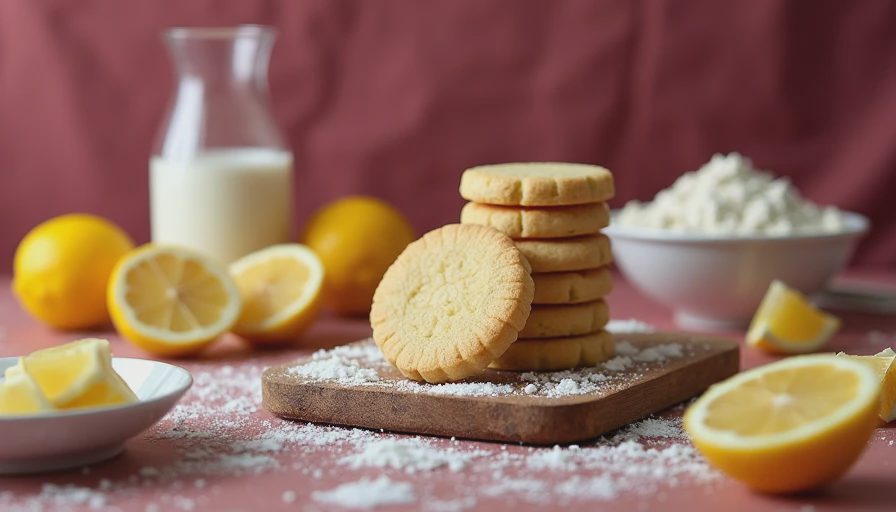
Lemon shortbread cookies should be crisp at the edges, tender in the center, and fragrant enough to make the whole kitchen smell like sunshine. These lemon shortbread cookies use less sugar than a traditional recipe, but they do not taste like a compromise. The butter still brings richness, fresh lemon provides a clean finish, and a small amount of cornstarch keeps the texture delicate rather than dense.
I developed this version after watching too many reduced-sugar cookies turn dry and bland. Sugar is not only a sweetener in shortbread. It affects spread, browning, tenderness, and the way your tongue perceives citrus. Remove too much without adjusting the rest of the formula, and the cookies can taste floury. Here, we use granulated sugar strategically, rely on lemon zest for intense flavor, and chill the dough so the butter behaves properly.
Why These Lemon Shortbread Cookies Work
The ingredient list is short, so each component matters. Use unsalted butter that is cool room temperature: soft enough to press with a finger, but not shiny, greasy, or melting. Butter supplies the water and fat that create a sandy, crumbly shortbread texture. All-purpose flour gives the cookies structure, while cornstarch reduces gluten development and creates a more delicate bite.
For one batch, cream 1 cup of unsalted butter with 1/2 cup plus 2 tablespoons of granulated sugar. This is noticeably less sugar than many classic shortbread formulas, which often approach a one-to-one ratio of butter and sugar by weight. Add 2 tablespoons of finely grated lemon zest, 1 teaspoon of vanilla extract, and 1/2 teaspoon of kosher salt. Mix in 2 cups of all-purpose flour combined with 1/4 cup of cornstarch.
The zest is more important than extra lemon juice. Lemon juice adds water, which can make the dough sticky and encourage toughness. The yellow outer peel contains aromatic oils, so zest delivers concentrated lemon flavor without changing the dough's hydration. If your lemons are waxy, scrub and dry them first. Zest only the yellow layer; the white pith underneath is bitter.

How to Make the Dough
Beat the butter and sugar for about two minutes, just until smooth. You are not trying to whip in a large amount of air, as you would for a cake. Excess air can make the cookies puff and then collapse. Scrape the bowl, add the lemon zest, vanilla, and salt, and mix until the lemon is evenly distributed.
Add the flour and cornstarch in two additions. Mix on low speed or stir by hand just until no dry streaks remain. The dough should look crumbly at first, then come together when squeezed. If it seems exceptionally dry, give it another minute of gentle mixing before adding anything. A tablespoon of milk is a better rescue than extra lemon juice, but most batches do not need it.
Shape the dough into a log about 2 inches in diameter, wrap it in parchment, and chill for at least 45 minutes. For cutout lemon shortbread cookies, press the dough into a flat disk instead, chill it, then roll it between parchment to about 1/4 inch thick. The log method is faster and gives you neat rounds; the rolled method is better for stars, flowers, or small gift-box cookies.
Baking for Crisp Edges and Tender Centers
Heat the oven to 325 degrees F and line two baking sheets with parchment. Slice the chilled log into rounds about 1/4 inch thick, or cut the rolled dough into shapes. Arrange the pieces with about 1 inch between them. These cookies do not spread dramatically, but space allows heat to circulate and edges to brown evenly.
Bake one sheet at a time for 14 to 18 minutes. Look for set centers and lightly golden edges, not deep brown tops. Because this recipe contains less sugar, it may brown more slowly than a conventional shortbread. That is useful: you can wait for the butter to finish crisping the edges without burning the surface. Let the cookies cool on the baking sheet for 8 minutes, then move them to a rack.
The finished lemon shortbread cookies should feel fragile while warm and firm after cooling. If they crumble into dust, they were either overbaked or sliced too thin. If they remain soft after cooling, return them to a 300-degree oven for 3 to 5 minutes, then cool again. Ovens vary, so the first batch is your calibration batch.
Smart Ways to Reduce Sugar Without Losing Flavor
I would not replace all the sugar with a liquid sweetener. Honey and maple syrup add water and can make shortbread spread, soften, and lose its clean snap. Sugar alcohols can also create a cooling sensation or a brittle texture, depending on the product. For this recipe, reducing granulated sugar modestly preserves the structure while keeping the flavor balanced.
If you want lemon shortbread cookies with a slightly sweeter finish, dust the cooled tops with 1/4 cup of powdered sugar mixed with 1 tablespoon of lemon juice. This creates a thin glaze, not a thick icing. For a lower-sugar option, skip the glaze and add a pinch of finely grated zest over the cookies while they are still warm. The aroma makes the cookies taste more lemony without adding sweetness.
For a more pronounced citrus profile, add 1/8 teaspoon of lemon extract along with the vanilla. Do not pour in several teaspoons; lemon extract can taste artificial and sharp. You can also add 2 tablespoons of finely chopped pistachios for color and crunch, although the nut pieces make the cookies slightly less classic.
Storage, Serving, and Troubleshooting
Store the cooled lemon shortbread cookies in an airtight tin at room temperature for up to one week. Separate layers with parchment. Their texture improves after several hours because the butter settles and the lemon aroma becomes rounder. The baked cookies can also be frozen for about two months. Thaw them uncovered for 20 minutes so condensation does not soften the surface.
You can freeze the shaped dough log for up to two months. Wrap it tightly in plastic wrap, then place it in a freezer bag. Thaw it in the refrigerator overnight before slicing. Do not bake the log directly from frozen unless you adjust the time carefully; the outside can brown before the center is fully baked.
If the dough spreads, the butter was probably too warm or the slices were not chilled long enough. If the cookies taste flat, add more zest rather than more juice. If they taste bitter, inspect the zest for pith. If the texture is tough, the flour was overmixed or packed heavily into the measuring cup. Weighing the flour, if you have a kitchen scale, is the most reliable fix.
A Better Dessert for the Cookie Plate
These lemon shortbread cookies are ideal with coffee, black tea, or a scoop of vanilla ice cream. They are sturdy enough for a lunchbox once cooled, yet delicate enough for a spring brunch or holiday cookie tray. I especially like serving them beside berries, where the tart lemon and fresh fruit make the reduced sweetness feel intentional rather than restrictive.
The nutrition lesson is simple: less sugar does not mean no sugar, and a smaller portion can still be satisfying when the texture and flavor are right. One cookie with a meal or snack is a different experience from absentmindedly eating six from a container. If you are watching carbohydrate intake for diabetes or prediabetes, remember that flour contributes carbohydrate too; consider the full recipe and your usual eating pattern rather than focusing only on the sugar.
Make lemon shortbread cookies when you want a real dessert with a bright, buttery personality. Chill the dough, trust the zest, and pull the pan when the edges are just golden. Less sugar. Same joy.




Letters
No letters yet — be the first to write.