A good sprinkle cookie recipe should produce more than colorful dough. It should give you crisp edges, a tender center, cheerful confetti, and enough sweetness to feel like dessert without leaving your teeth coated in sugar. This version is the one I make for school celebrations, winter cookie trays, and ordinary Saturdays when my kids want to bake. It uses less granulated sugar than many classic recipes, but keeps the butter, vanilla, and salt that make a cookie taste complete. Less sugar. Same joy.
Why this lower-sugar cookie still works
Sugar does several jobs in a cookie. It sweetens, helps the edges brown, encourages spread, and holds onto moisture. That is why simply cutting the sugar in half often creates a pale, cakey, or crumbly result. In this sprinkle cookie recipe, I reduce the sugar modestly rather than aggressively, then balance the dough with softened butter, one egg yolk, and a small amount of cornstarch. The yolk adds richness without making the cookies tough, while cornstarch keeps the centers soft.
I use 1/2 cup plus 2 tablespoons of granulated sugar for about 24 cookies. That is enough for a clearly sweet treat, but less than the 3/4 cup or 1 cup found in many drop-cookie formulas. The honest taste test: you notice the buttery vanilla first, then the sprinkles, rather than a sharp burst of sugar. Adults usually appreciate that balance, and children still recognize these as celebration cookies.
Ingredients and the exact ratios
For this sprinkle cookie recipe, gather 10 tablespoons unsalted butter, softened but not melted; 1/2 cup plus 2 tablespoons granulated sugar; one large egg yolk; 2 teaspoons pure vanilla extract; 1 1/2 cups all-purpose flour; 2 tablespoons cornstarch; 1/2 teaspoon baking powder; 1/4 teaspoon baking soda; 1/2 teaspoon fine salt; and 1/3 cup sprinkles.
Use jimmies rather than nonpareils if you want strong color with less bleeding. Brands such as Wilton or Betty Crocker jimmies work well, though any food-safe sprinkles are fine. Avoid very large sugar shapes because they can melt unevenly and make the cookies crack. If you only have salted butter, reduce the added salt to 1/4 teaspoon.
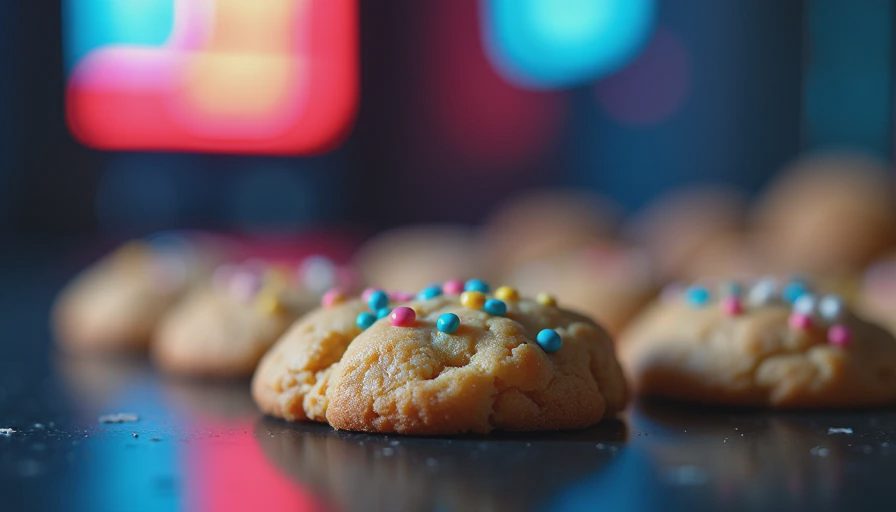
For a little more whole-grain flavor, replace 1/4 cup of the all-purpose flour with white whole-wheat flour. I would not replace all the flour in this sprinkle cookie recipe: too much whole-grain flour can make the cookies dense and distract from their delicate texture. If you need a gluten-free batch, use a tested one-to-one flour blend that includes xanthan gum, but expect a slightly more fragile cookie.
How to make the dough
Start by beating the softened butter and sugar together for about two minutes, until smooth and lighter in color. The butter should dent easily when pressed, but it should not look oily. Beat in the egg yolk and vanilla. Scrape the bowl so the mixture is even, then add the flour, cornstarch, baking powder, baking soda, and salt. Mix on low just until a few dry streaks remain. Fold in the sprinkles by hand.
A reliable sprinkle cookie recipe depends on avoiding overmixing. Once flour is hydrated, continued beating develops gluten, which can make a tender cookie chewy in the wrong way. Stop as soon as the dough holds together. Scoop portions about 1 1/2 tablespoons each and roll them into balls. Set them on parchment-lined baking sheets with at least two inches between portions.
Chill the shaped dough for 30 minutes. This step is not decorative kitchen advice; it firms the butter so the cookies do not flatten too quickly in the oven. Heat the oven to 350 degrees Fahrenheit while the dough chills. Bake one sheet at a time for 10 to 12 minutes, rotating the pan at the midpoint. The edges should look set while the centers still appear slightly soft.
Reading the bake correctly
The best sprinkle cookie recipe will look a little underdone when it leaves the oven. Cookies continue cooking on the hot baking sheet for several minutes. If you wait for brown centers, the finished texture will be dry. Let the cookies rest on the pan for five minutes, then move them to a cooling rack. For crisper edges, bake closer to 12 minutes; for a softer center, begin checking at 10 minutes.
Sprinkles can make doneness harder to judge because bright colors hide browning. Watch the perimeter of the cookie and gently press the center with a fingertip. It should spring back slightly rather than feel wet. If the first tray spreads too much, chill the remaining dough for another 15 minutes. If it barely spreads, your butter was probably too cool or your flour was packed heavily into the measuring cup.
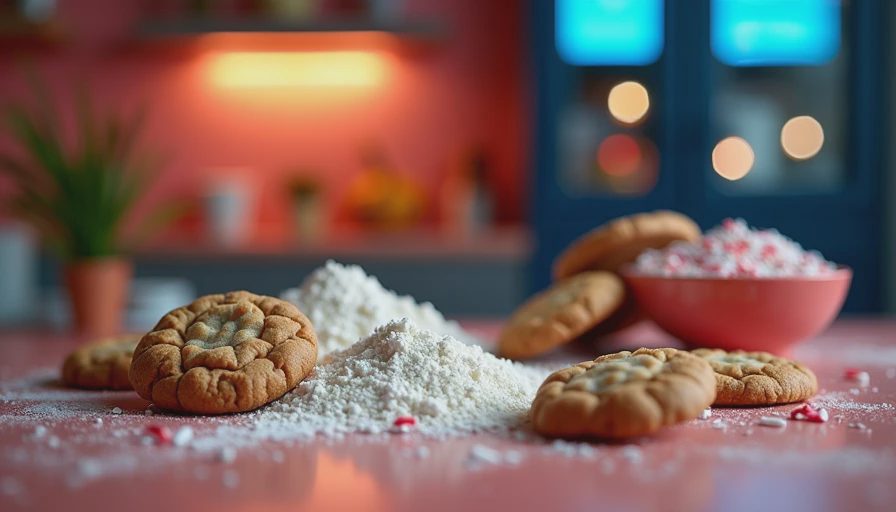
Smart ways to adjust sweetness
This sprinkle cookie recipe is intentionally only moderately sweet, so the flavor stays balanced when you add colorful decorations. If you are serving people who prefer a bakery-style cookie, increase the sugar by 2 tablespoons. I would not use a liquid sweetener such as maple syrup without changing the flour and chilling time; extra liquid alters spread and can make the centers gummy.
You can also add 1/4 teaspoon almond extract alongside the vanilla for a classic bakery-cookie note. For a birthday version, use rainbow jimmies. For a winter tray, try red and green sprinkles with a pinch of orange zest. The zest adds aroma without needing more sugar. A tablespoon of finely grated citrus zest is enough for this batch.
Storage, freezing, and serving
Store cooled cookies in an airtight container at room temperature for up to four days. Place parchment between layers if the sprinkles are delicate. The baked cookies can be frozen for about two months; thaw them uncovered for 20 minutes so condensation does not soften the surface.
For make-ahead baking, freeze unbaked dough balls on a tray, then transfer them to a freezer bag. Bake directly from frozen at 350 degrees, adding two or three minutes to the cooking time. This sprinkle cookie recipe is especially useful for that approach because the chilled dough holds its shape well. Do not freeze the dough in one large block unless you enjoy waiting for it to soften before portioning.
A simple nutrition-minded serving approach
A lower-sugar cookie is still a cookie, and that is perfectly compatible with a practical eating pattern. Serve one or two with coffee, milk, or fruit rather than treating a whole plate as a serving. Pairing dessert with a meal or snack that includes protein and fiber can feel steadier than eating sweets alone, especially for people watching carbohydrate intake. The recipe does not become sugar-free because the sugar is reduced, and it does not need to. The goal is a satisfying portion, not a promise that dessert has no effect.
If you want to compare versions, bake half the dough with the standard amount and half with the reduced amount. Taste them side by side after cooling completely. In my kitchen, the lower-sugar batch wins when the butter is fresh, the vanilla is generous, and the sprinkles are evenly distributed. That combination gives you a cookie worth bringing to the party: colorful, tender, and sweet enough to celebrate.

Letters
No letters yet — be the first to write.