An apple fritter cake should taste like the best part of a bakery fritter: tender apples, cinnamon, browned edges, and a thin glaze that crackles slightly as it sets. This apple fritter cake delivers that experience from a standard 8-inch square pan, without requiring a deep fryer or a cup and a half of sugar. I developed it for the mornings when my family wanted something special but I wanted a dessert that would not leave everyone reaching for a second cup of coffee.
The important distinction is that sugar is not only a sweetener. It helps cakes brown, hold moisture, and stay tender. That is why simply cutting the sugar in half often produces a dry, pale, rubbery result. Here, the batter uses a moderate amount of brown sugar, while applesauce and naturally sweet apples supply extra moisture and flavor. Less sugar. Same joy.
Why this apple fritter cake works
Choose apples that soften but do not disappear completely. Honeycrisp, Braeburn, Pink Lady, and Granny Smith all work well. I usually combine one tart Granny Smith with one sweeter Honeycrisp, because the contrast keeps the cake from tasting flat. Peel and dice the apples into pieces about one-third inch wide. Larger chunks can make the center wet; tiny pieces turn into applesauce.
The base is built around all-purpose flour, baking powder, cinnamon, nutmeg, salt, eggs, plain Greek yogurt, unsweetened applesauce, vanilla, and melted butter. Greek yogurt adds protein and acidity, which helps create a soft crumb, while applesauce contributes water and body. Use full-fat or 2% yogurt for the most satisfying texture; nonfat works, but the finished cake is slightly less plush.
For an 8-inch square cake, combine 1 1/2 cups flour, 1 1/2 teaspoons baking powder, 1 teaspoon cinnamon, 1/4 teaspoon nutmeg, and 1/2 teaspoon salt. In another bowl, whisk 1/2 cup packed light brown sugar with two eggs, 1/3 cup Greek yogurt, 1/4 cup unsweetened applesauce, 3 tablespoons melted butter, and 2 teaspoons vanilla. Fold the wet mixture into the dry ingredients, then fold in 1 1/2 cups diced apples.
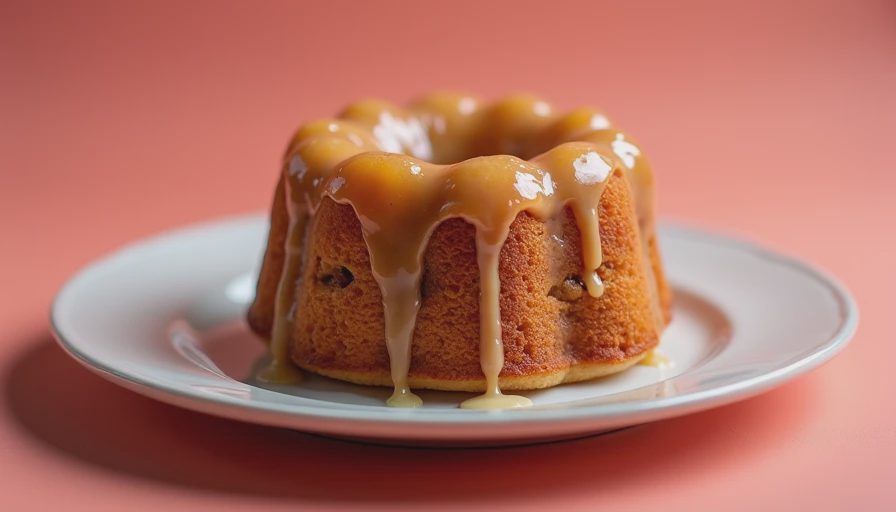
How to bake the apple fritter cake
Heat the oven to 350°F and line the pan with parchment, leaving enough overhang to lift the cake out later. Spread half the batter into the pan. Stir 2 tablespoons brown sugar with 1 teaspoon cinnamon and sprinkle it over the batter. Add the remaining batter in spoonfuls, then smooth it gently. This creates a cinnamon ribbon rather than a heavy layer that sinks to the bottom.
Bake for 38 to 45 minutes. Start checking at 38 minutes by inserting a toothpick into the center; a few moist crumbs are fine, but wet batter is not. The surface should be golden, the edges should pull back slightly, and the center should spring back when pressed lightly. If the top browns before the middle is ready, tent it loosely with foil for the final 8 minutes.
Let the cake cool in the pan for 20 minutes. This pause matters because the apple juices are still moving through the crumb when the cake leaves the oven. Cutting too soon can make an otherwise successful bake seem gummy. Once warm rather than hot, lift it onto a rack and glaze it.
For the glaze, whisk 3/4 cup powdered sugar with 1 tablespoon milk, 1/2 teaspoon vanilla, and a small pinch of salt. Add another teaspoon of milk only if needed. The glaze should fall from the whisk in a narrow ribbon. A thin glaze gives the apple fritter cake its familiar finish without turning every bite into a sugar bomb.
Smart sugar swaps and honest expectations
Do not replace the brown sugar one-for-one with liquid maple syrup. Syrup adds water and changes the batter's structure, so the center can become heavy. If you want maple flavor, replace 2 tablespoons of the brown sugar with 1 tablespoon maple syrup and reduce the applesauce by 1 tablespoon. That is a small enough adjustment to keep the cake balanced.
Granulated monk fruit blends can work in the batter, but brands differ. A cup-for-cup blend is the simplest option, although some products leave a cooling aftertaste. My preferred compromise is 1/4 cup brown sugar plus 1/4 cup cup-for-cup monk fruit blend. The brown sugar supplies deeper flavor and better browning, while the blend reduces the total added sugar. In a taste test, my family noticed that this version was less caramel-like than the all-brown-sugar batch, but nobody called it bland.
The glaze is where sweetness is easiest to control. For a lightly sweet finish, use 1/2 cup powdered sugar and 2 teaspoons milk. For a classic bakery-style coating, use the full 3/4 cup. You can also skip the glaze and brush the warm cake with 1 tablespoon melted butter mixed with cinnamon. It will not taste like a traditional fritter, but it makes a lovely breakfast cake.
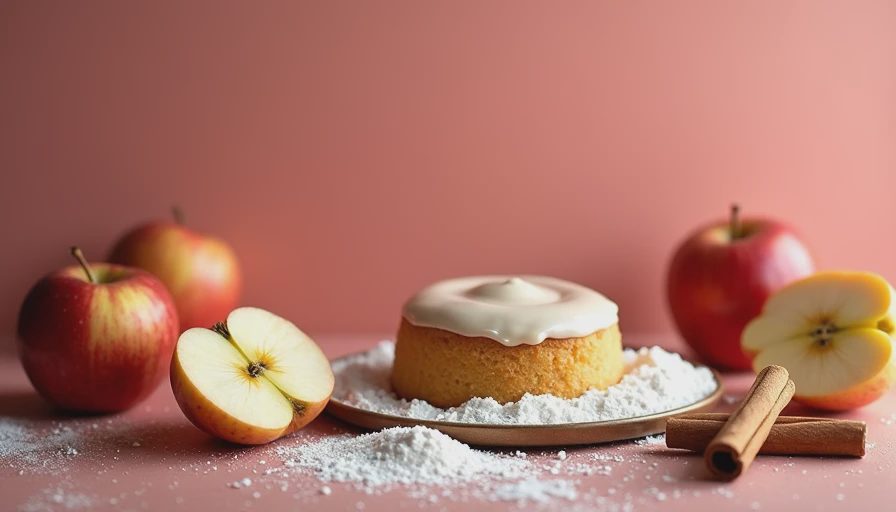
Troubleshooting your apple fritter cake
If the middle sinks, the most common cause is underbaking or too much apple moisture. Pat freshly washed apple pieces dry before folding them in, and use the toothpick test in the center rather than near an apple chunk. If the cake is dry, it probably baked too long or the flour was packed into the measuring cup. Spoon flour into the cup and level it with a knife, or weigh out 180 grams.
If the crumb feels tough, check your mixing. Once flour meets liquid, stir only until no dry streaks remain. A few small lumps are completely acceptable. Overmixing develops gluten, and that gives the cake a chewy texture instead of the soft, pull-apart crumb you want.
Store leftovers covered at room temperature for two days. Because the cake contains fresh apples and yogurt, refrigerate it after that point. Bring chilled pieces to room temperature, or warm one in the microwave for 10 to 15 seconds. The glaze will soften, but the cinnamon aroma comes back beautifully.
Serving ideas and the final bake
Serve a square with coffee, plain yogurt, or a spoonful of lightly sweetened whipped cream. For a fall gathering, cut the cake into 16 small pieces; for dessert, cut it into nine generous squares. A toasted pecan topping is delicious, but add no more than 1/3 cup so it does not weigh down the batter.
This apple fritter cake is not identical to a deep-fried pastry, and I would never promise that it is. It has a softer, more cakey center and a cleaner apple flavor. What it does offer is the cinnamon-sugar pleasure people actually remember, with less added sugar and a much simpler method. Make it once as written, then adjust the glaze to your household's taste. When you are ready for a dependable apple dessert that feels celebratory without being excessive, this apple fritter cake earns a place in the regular rotation.
Letters
No letters yet — be the first to write.