Chocolate chip peanut butter cookies are the kind of dessert that disappears from a cooling rack before the oven has fully cooled. This version keeps the salty peanut butter, puddles of chocolate, and chewy center, but uses less sugar with a specific ratio rather than a vague “healthy” swap. I developed it for the adults who want a genuinely good cookie and for families who want a sweet treat that does not leave everyone hunting for another snack an hour later.
The result is not identical to a bakery cookie made with a full amount of white and brown sugar. It is slightly less glossy, a little more tender, and noticeably less sweet. That is a trade I happily make because the roasted peanut flavor and dark chocolate taste clearer. Less sugar. Same joy.
Ingredients that make the texture work
For about 24 medium chocolate chip peanut butter cookies, use 1/2 cup creamy peanut butter, 4 tablespoons softened unsalted butter, 1/3 cup packed light brown sugar, 1/4 cup granulated allulose or a cup-for-cup baking sweetener, one large egg, 1 teaspoon vanilla extract, 1 cup plus 2 tablespoons all-purpose flour, 1/2 teaspoon baking soda, 1/2 teaspoon fine salt, and 3/4 cup semisweet chocolate chips.
Choose regular creamy peanut butter rather than a very runny natural variety for the most predictable dough. If natural peanut butter is what you have, stir it thoroughly and measure it after the oil is reincorporated. A separated jar can make the cookies spread into thin, fragile rounds.
The brown sugar stays because it contributes more than sweetness. Its small amount of molasses adds moisture, color, and a soft chew. Replacing every grain of sugar with a dry sweetener often produces a cookie that tastes cold and brittle. Allulose helps with browning and tenderness, while the peanut butter supplies fat and protein that keep the center substantial.

Why this lower-sugar formula still tastes like dessert
In chocolate chip peanut butter cookies, sugar performs several jobs: it sweetens, attracts water, encourages spreading, and helps the edges brown. Reduce it too aggressively and you lose the familiar thin edge and caramel note. That is why I prefer a measured reduction instead of cutting the sugar in half and hoping peanut butter fills the gap.
The chocolate also matters. Semisweet chips with roughly 50 to 60 percent cacao bring enough bitterness to make the cookie taste rich without requiring extra sweetener. Milk chocolate works, but it makes the overall bite sweeter and softer. For a more grown-up cookie, use chopped dark chocolate from a baking bar; irregular pieces create thin melted streaks as well as larger chocolate pockets.
The peanut butter contributes protein, fat, and roasted flavor, but it does not replace the structure provided by flour and egg. A tablespoon of flour can be the difference between a cookie that holds its shape and one that spreads into a greasy puddle, especially on a warm baking sheet.
How to mix and bake the dough
Start by heating the oven to 350°F. Line two baking sheets with parchment. Cream the softened butter, peanut butter, brown sugar, and allulose for about 90 seconds. The mixture will not become as airy as a traditional butter-and-sugar base, and that is fine. Add the egg and vanilla, then mix until smooth.
Whisk the flour, baking soda, and salt in a separate bowl. Add the dry ingredients to the peanut butter mixture and stir just until no dry streaks remain. Fold in the chocolate chips. Overmixing develops gluten and makes the finished cookies firm instead of tender.
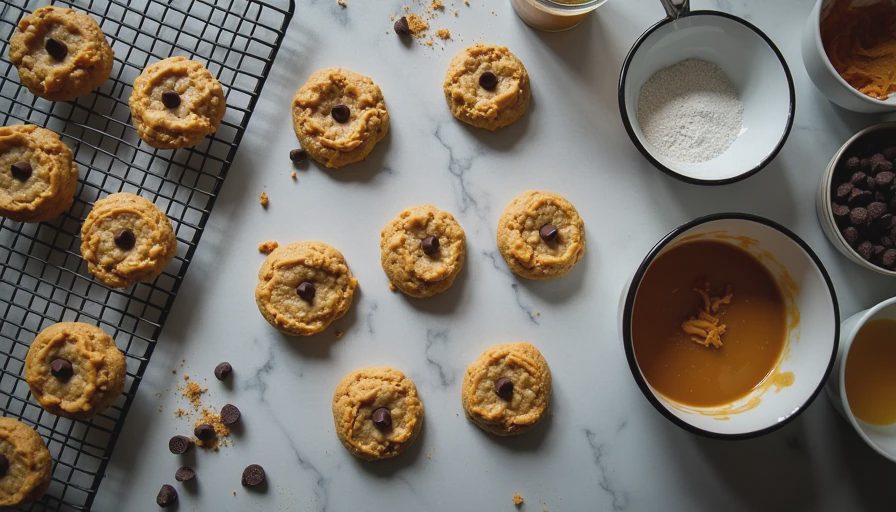
Scoop the dough into portions of about 1 1/2 tablespoons. Roll each portion lightly, place them two inches apart, and press the tops with the bottom of a glass or a fork. These chocolate chip peanut butter cookies do not spread as dramatically as a high-sugar formula, so the shape you create before baking largely determines the final look.
Bake one sheet at a time for 9 to 11 minutes. Pull the cookies when the edges look set but the centers still appear slightly soft. They will continue cooking on the hot pan. Leave them there for five minutes, then move them to a rack. Waiting for a deeply brown center usually leads to dry cookies after they cool.
A simple way to adjust sweetness and carbs
If you are new to reduced-sugar baking, make the recipe exactly as written the first time. Taste the dough only if you are comfortable doing so without raw egg, or use a tiny egg-free sample after mixing the dry ingredients with the peanut butter mixture. On the next batch, you can reduce the brown sugar from 1/3 cup to 1/4 cup for a more subtle cookie, but I would not remove it completely.
For chocolate chip peanut butter cookies intended for someone monitoring blood glucose, remember that lower sugar does not mean carbohydrate-free. Flour, chocolate, and some sweeteners still contribute carbohydrate, and portion size matters. A practical serving is one cookie with a meal or snack that includes protein and fiber, rather than several cookies eaten quickly from the container. Individual nutrition depends on the brands and ingredients you use, so check your labels if you need an exact calculation.
You can also add 2 tablespoons of chopped roasted peanuts for more crunch without adding much sweetness. A pinch of flaky salt on each dough ball makes the chocolate taste fuller and lets the recipe stay pleasantly restrained.
Troubleshooting common cookie problems
If the cookies spread too much, the butter was probably very soft, the peanut butter was oily, or the baking sheet was still warm from a previous batch. Chill the scooped dough for 20 minutes and use a cool pan. If they stay in tall mounds, press them flatter before baking or add one additional teaspoon of milk to the next batch.
If the centers are dry, check your flour measurement first. Scooping flour directly from the bag can pack too much into the cup. Fluff it, spoon it into the measuring cup, and level it. Overbaking is the other common cause; the centers should look underdone when the pan leaves the oven.
Crumbly chocolate chip peanut butter cookies usually need a little more moisture or a shorter bake. Let the dough rest for five minutes before deciding it is too dry, because the flour absorbs liquid as it sits. If needed, mix in 1 teaspoon of milk at a time.
Storage, freezing, and serving
Once completely cool, store the cookies in an airtight container for up to four days. Place parchment between layers if you add flaky salt or use a very soft chocolate. The texture is best on the first two days, when the edges remain lightly crisp and the centers are chewy.
To freeze, scoop the dough onto a parchment-lined tray and freeze until solid. Transfer the portions to a freezer bag, label it, and bake from frozen, adding about 2 minutes to the baking time. Frozen chocolate chip peanut butter cookies are useful when you want a small dessert without keeping a full container on the counter.
Serve one slightly warm with coffee, milk, or plain Greek yogurt. These cookies are not a promise that sugar never belongs in dessert. They are proof that a thoughtful ratio, good peanut butter, and real chocolate can make a less-sweet bake feel complete. Make a batch, taste it honestly, and adjust the next one to your table.



Letters
No letters yet — be the first to write.