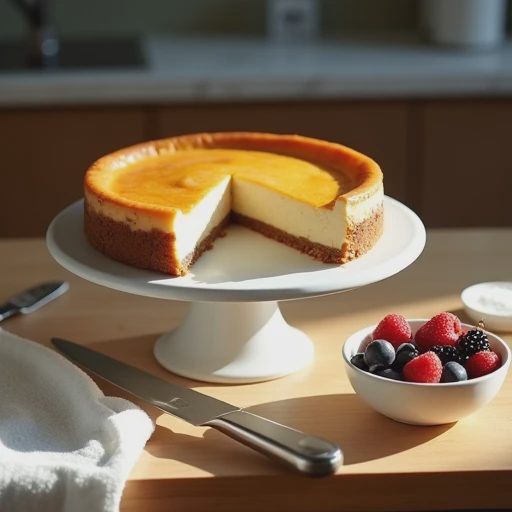
Cheesecake has a reputation problem in lower-sugar baking. Most versions either taste like sweetened cream cheese with a vague sense of loss, or they rely on so many substitutes that the texture turns chalky or rubbery. I wanted one that still feels like the real thing—dense, creamy, slightly tangy, with a proper browned top—while keeping the sugar low enough that it does not send blood glucose on a ride.
This is the version that survived repeated family taste tests. My kids eat it without commentary. Guests have asked for the recipe and been surprised when I told them how little sugar is in it. That is the standard.
Why This Version Works
Traditional New York-style cheesecake leans heavily on sugar for sweetness, structure, and to balance the tang of the cream cheese. When you remove most of it, three problems appear: the filling can taste flat, the texture can become grainy or overly firm, and the top may refuse to brown nicely.
Here is how I solved them:
Allulose provides bulk, helps with browning, and keeps the filling creamy without the cooling effect some sugar alcohols leave behind.
A small amount of a monk fruit blend (or pure extract) fine-tunes the sweetness so the cheesecake does not taste under-sweet.
I keep a modest spoonful of real maple syrup or honey for depth and to help the surface color. Completely eliminating every trace of real sugar makes the flavor one-dimensional.
Full-fat cream cheese, sour cream, and an extra egg yolk protect the luxurious texture when sugar is reduced.
A water bath and a lower, slower bake prevent the cracks and curdling that become more likely with less sugar.
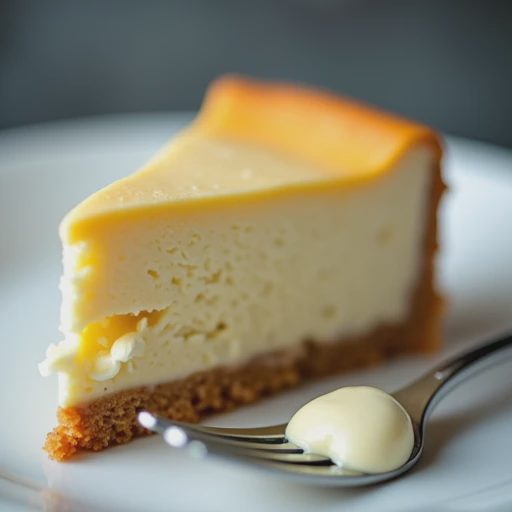
The result is a cheesecake that is noticeably lower in sugar than the classic, yet still tastes like dessert rather than a project.
The Recipe
Yield: One 9-inch cheesecake (12 servings)
Prep: 25 minutes + chilling
Bake: 60–75 minutes
Cool & chill: At least 6 hours, preferably overnight
Crust
1½ cups (150 g) almond flour (or graham cracker crumbs if you prefer)
3 tablespoons allulose or 1:1 monk fruit blend
5 tablespoons (70 g) unsalted butter, melted
Pinch of salt
Optional: ½ teaspoon cinnamon
Mix everything until it looks like wet sand. Press firmly into the bottom of a 9-inch springform pan. Bake at 350°F (175°C) for 10 minutes. Cool while you make the filling. Lower the oven to 325°F (160°C).
Filling
24 oz (680 g) full-fat cream cheese, room temperature
⅔ cup (130–140 g) allulose
2–3 tablespoons 1:1 monk fruit–erythritol blend (or ⅛–¼ teaspoon pure monk fruit extract)
2 tablespoons pure maple syrup (or honey)
1 cup (240 g) full-fat sour cream, room temperature
3 large eggs + 1 egg yolk, room temperature
2 teaspoons pure vanilla extract
1 tablespoon fresh lemon juice
Pinch of salt
Optional: 1 tablespoon cornstarch or arrowroot (helps stability with less sugar)
Method
Beat the cream cheese alone until completely smooth and free of lumps—about 2 minutes. Scrape the bowl thoroughly.
Add the allulose, monk fruit blend, and maple syrup. Beat on medium until creamy and fully combined.
Mix in the sour cream, vanilla, lemon juice, salt, and cornstarch (if using).
Add the eggs and yolk one at a time on low speed, mixing just until each disappears. Do not over-beat once the eggs are in; excess air can cause cracking.
Pour the filling over the cooled crust. Tap the pan gently on the counter to release air bubbles.
Place the springform pan inside a larger roasting pan. Pour hot water into the roasting pan until it reaches halfway up the sides of the springform (wrap the springform in foil first if you are worried about leaks).
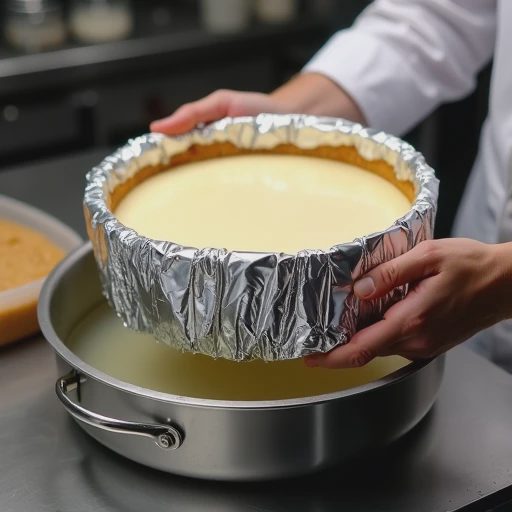
Bake at 325°F for 60–75 minutes. The edges should be set; the center should still have a slight jiggle, like set gelatin.
Turn off the oven, crack the door, and let the cheesecake cool inside for 1 hour. This gentle cool-down reduces cracking.
Remove from the water bath, run a thin knife around the edge, and cool to room temperature. Refrigerate at least 6 hours or overnight.
Serving & Topping Ideas
A plain slice is excellent. If you want a topping that stays low-sugar:
Roasted strawberry compote (from the summer strawberry post)
A handful of fresh berries with a tiny pinch of monk fruit
Lightly sweetened whipped cream (1 cup cream + 1–2 teaspoons powdered monk fruit blend)
Avoid heavy, sugary fruit sauces if blood-sugar response is the priority.
Honest Taste-Test Notes
Side-by-side with a traditional full-sugar cheesecake:
Sweetness sits at about 75–80 %. Most people do not register it as “low sugar” unless they are told.
Texture is creamy and dense, very close to the classic. The extra yolk and full-fat dairy make a noticeable difference.
The top browns lightly thanks to the allulose and maple. Without them it stays paler.
Flavor has the proper tang-to-sweet balance. The small amount of maple prevents the “missing something” note that pure alternative-sweetener cheesecakes often have.
Troubleshooting
Cracks: Usually from over-mixing after adding eggs, skipping the water bath, or cooling too quickly. The water bath and slow cool are worth the effort.
Too soft: Needs longer chilling. Some lower-sugar versions set more slowly.
Grainy: Cream cheese was too cold or not beaten smooth before adding other ingredients.
Not sweet enough for your table: Increase the monk fruit blend by a tablespoon next time. Sweetness preference varies.
Store covered in the refrigerator for up to five days. It also freezes well (whole or in slices) for up to a month.
This is the cheesecake I make when I want something that feels special without the usual aftermath. No one has to know it is lower sugar unless you tell them.
Less sugar. Same joy.


Letters
No letters yet — be the first to write.