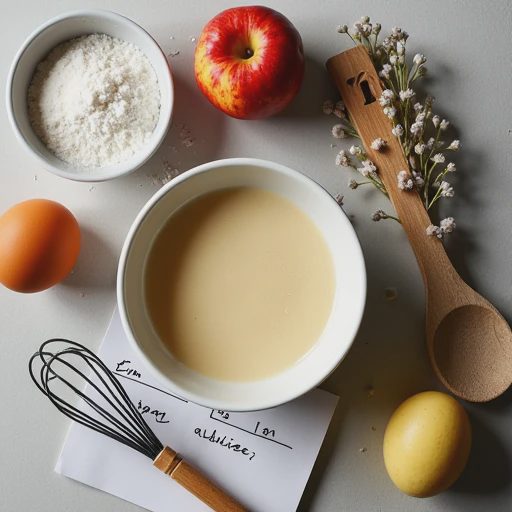
Sadie is seven and already has opinions about cookie texture. Micah is four and mostly interested in licking the beater. Neither of them has ever heard me say that sugar is bad. They have heard me say, plenty of times, that we use enough to make the thing taste good and not so much that we feel awful afterward.
That is the entire philosophy.
I am a dietitian. I spend my workdays talking with people about blood sugar, energy, and the long game of how food makes them feel. I am also the person who shows up to the school bake sale and the birthday party with dessert. Those two roles only conflict if you decide that dessert itself is the problem. I decided years ago that it is not.
What the Kitchen Actually Looks Like
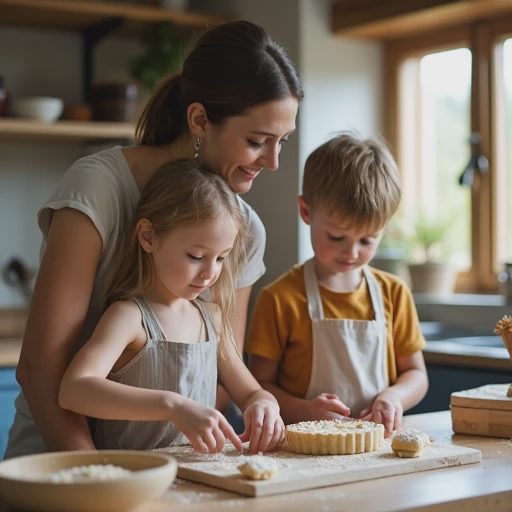
We bake together most weekends. The recipes are the same lower-sugar ones I publish here—chocolate chip cookies with allulose and a little brown sugar, skillet fruit crisps that rely on ripe fruit, the cheesecake that does not leave anyone in a fog. The kids measure, pour, crack eggs (with varying accuracy), and argue about chocolate chip distribution.
I do not give them a lecture while we bake. I do answer questions when they come up.
“Why does this one have less sugar than Grandma’s?”
“Because we can make it taste just as good with less, and our bodies like that better.”
“Can we add more?”
“We can try a little more next time and see what we think. Today we’re using this amount.”
They are learning the same thing I want adults to learn: sugar is an ingredient with a job, not a moral test. You respect what it does—sweetness, tenderness, browning, moisture—and you use enough to get the result you want. You do not use it as the main event.
Fear Makes People Sneaky
I have watched families treat sugar like contraband. The children get a hard no at home and then overdo it the moment they are at a friend’s house or a party. The parents feel guilty; the kids feel deprived; everyone ends up eating more of the very thing they were trying to avoid.
Respect works better than fear. When dessert is ordinary—something we make and eat on purpose—it loses its forbidden glamour. My kids know there will be cookies again next weekend. They do not need to finish the entire plate today as if the supply might disappear forever.
They also know that not every dessert is the same. The birthday cake at a party is usually the full-sugar version. We enjoy it. We do not pretend it is what we make at home. Both can exist.
What I Want Them to Carry Forward
I am not raising children who never eat sugar. I am raising children who understand that food has consequences and that those consequences are manageable. They see me read a recipe and decide where we can lower the sugar without wrecking it. They see me choose the smaller piece sometimes. They see me bake a full batch and freeze half so we are not swimming in cookies for days.
They are also learning the practical skills: how to cream butter, how to tell when a cookie is done, how to wash strawberries from the backyard and turn them into something that tastes like June. Those skills will matter longer than any single nutrition rule.
The Everyday Rule in Our House
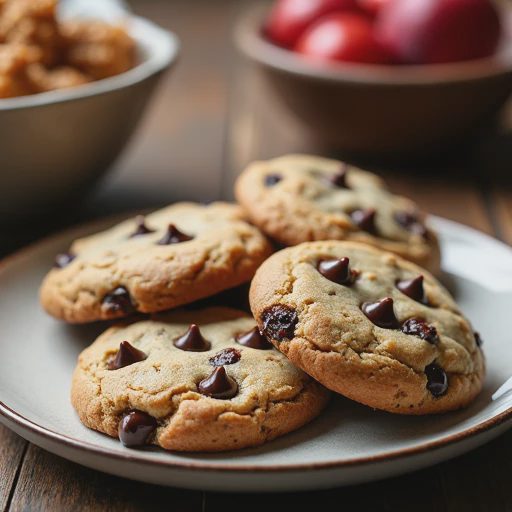
We bake real dessert. We keep the sugar lower than the traditional versions when we can do it without losing the joy. We eat it with attention instead of distraction. We move on with the day.
No one has to apologize for wanting something sweet. No one has to pretend that the sweet thing is nutritionally neutral. Both things are true at the same time.
That is what I mean when I say we do not fear sugar. We respect it—its power to make food delicious, and its power to leave us feeling less than our best when we ignore the dose.
Sadie is already starting to ask if we can try making the cookies with even a little less next time, just to see. Micah is still primarily focused on the beater. Both approaches are fine. We have years to keep practicing.
Less sugar. Same joy. And two small critics who will tell me exactly when I have gone too far in either direction.



Letters
No letters yet — be the first to write.