
The only taste test that matters in this house happens at the kitchen table, usually on a weekend afternoon, with no warning that anything is different.
I have learned not to announce a lower-sugar experiment in advance. The moment people hear “this one has less sugar,” many of them start searching for flaws. Blind or quiet testing gives clearer information. Over the past few years I have put a steady stream of reduced-sugar cakes, cookies, and other desserts in front of Aaron, Sadie, Micah, and whoever else is around. The results are consistent enough to share.
What “Fool” Actually Means
I do not mean that the cake is chemically identical to a full-sugar version. It is not. I mean that the people eating it reach for a second piece, finish it without comment, and do not ask why it tastes “off.” When that happens, the experiment succeeds. When someone pauses, frowns, or says, “It’s good… but different,” the recipe still needs work.
The bar is not perfection. The bar is ordinary enjoyment.
What the Family Actually Notices
Sadie (7)
She is the most reliable detector of texture problems. If a cake is dry or gummy, she will say so. Sweetness level rarely draws a comment from her unless it is dramatically low. She has eaten lower-sugar chocolate cake, carrot cake, and vanilla cupcakes without once asking whether something was missing.
Micah (4)
He is primarily interested in frosting quantity and whether there are sprinkles. He has never rejected a cake on sweetness grounds. His feedback is binary: he either keeps eating or abandons it for something else. Most of the successful lower-sugar versions keep him at the table.
Aaron
He is the most useful adult tester because he will tell me the truth and can articulate what he notices. His typical response to a well-executed version is, “I wouldn’t have known if you hadn’t told me.” When something falls short, he usually points to dryness, a missing depth of flavor, or a slight cooling aftertaste rather than a simple lack of sweetness.
Neighbors and friends who receive unmarked pieces almost never identify them as low-sugar. The most common reaction is simply, “This is really good.” The follow-up question is often a request for the recipe, not an inquiry about what is different.

Where the Differences Still Show Up
Honest testing has also shown me the limits.
Very aggressive sugar cuts (more than about 60 % without careful substitution) produce cakes that taste acceptable but somehow unfinished. People eat them, but they do not ask for seconds as readily.
Texture failures are more obvious than mild reductions in sweetness. A dry crumb or a gummy one gets noticed immediately.
Frosting sweetness matters. A cake with modest sugar and a very sweet frosting tastes unbalanced. Matching the two is essential.
Side-by-side comparison is the hardest test. When a full-sugar slice and a lower-sugar slice are eaten together, most people can detect a difference. When the lower-sugar cake is served on its own, the difference largely disappears for most eaters.
These results match what the science would predict. Sweetness is only one part of the experience. Moisture, tenderness, browning, and flavor complexity do as much (or more) to determine whether a cake feels satisfying.
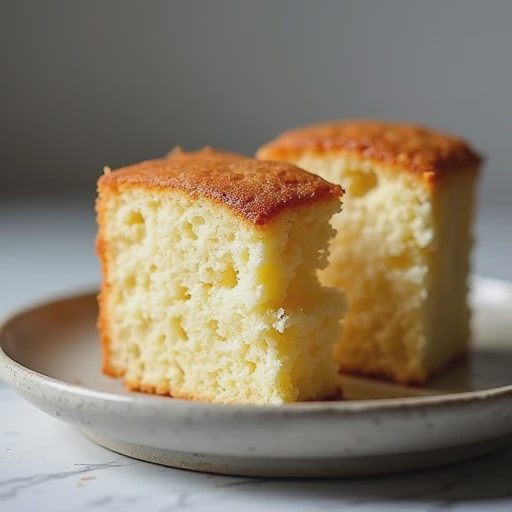
What Consistently Passes the Family Test
The cakes that reliably succeed share a few traits:
Allulose carries most of the sugar replacement, preserving moisture and crumb.
A portion of real sugar, brown sugar, or maple remains for depth and browning.
Fat and egg levels are kept generous enough to protect tenderness.
Flavorings (vanilla, spice, citrus, chocolate) are not skimped.
The recipe has been tested and adjusted at least once or twice before it reaches the table as a “finished” version.
When those elements are in place, the cake stops being a low-sugar project and becomes simply cake.
The Practical Takeaway
Yes, a carefully made lower-sugar cake can fool most of a family most of the time—if “fool” means they enjoy it without detecting a problem. It will not survive a determined side-by-side laboratory comparison against a full-sugar original, and it does not need to. Everyday dessert is not served with a control slice for reference.
The more useful question is whether the people you bake for clean their plates, ask for another piece, and remain happy they ate it an hour later. When the answer is yes, the sugar reduction has done its job.
I still keep notes. I still adjust. But the kitchen table verdict has been clear for a while: done properly, lower-sugar cake does not have to announce itself. It can just taste like cake.
Less sugar. Same joy.



Letters
No letters yet — be the first to write.