Affiliate Marketing Disclosure: This post contains affiliate links, including links to Amazon. If you make a purchase through one of these links, Sugar and Science may earn a small commission at no additional cost to you. I only recommend products I've actually tested in my own kitchen. This helps keep the site running — thank you for supporting the work.
For years, getting a true violet crumb into a cake meant reaching for a bottle of artificial dye — and watching it fade into a dull gray-blue the second it hit the oven. I spent more Saturday mornings than I'd like to admit troubleshooting "ube" cakes that came out looking more like ash than amethyst.
Then a reader recommended I try purple sweet potato powder instead of liquid dye, and it genuinely changed how I approach color in my baking. The bag that's been living in my pantry for the past two months is NutraBloom Purple Sweet Potato Powder, and this is my full, unsponsored-feeling but fully transparent breakdown of what it does well, where it falls short, and whether it's worth adding to your own baking shelf.
What Is Purple Sweet Potato Powder, Exactly?
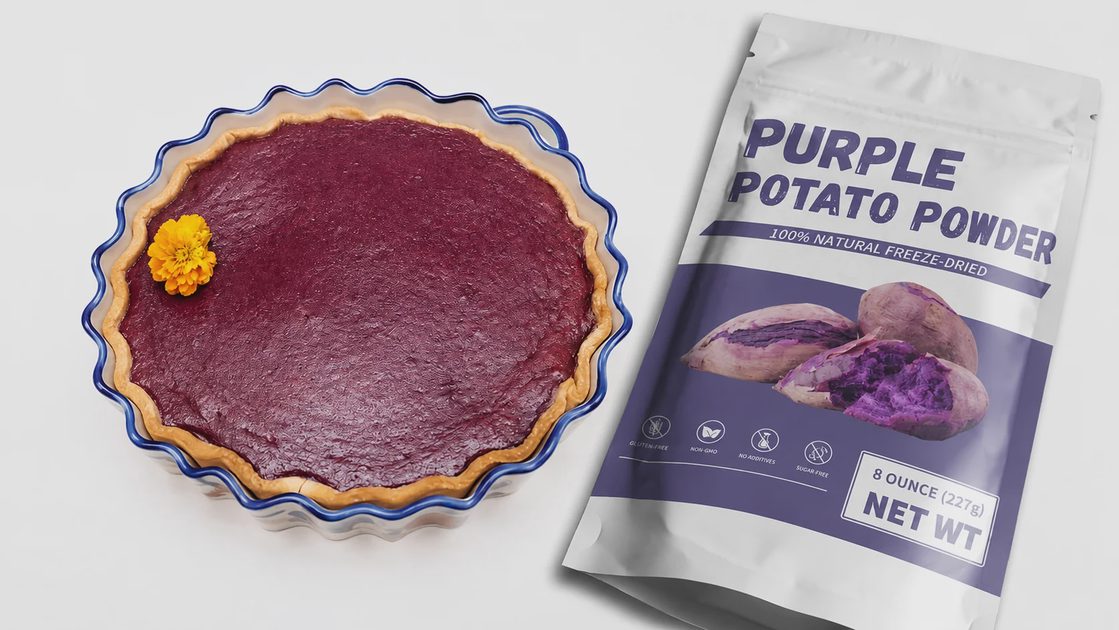
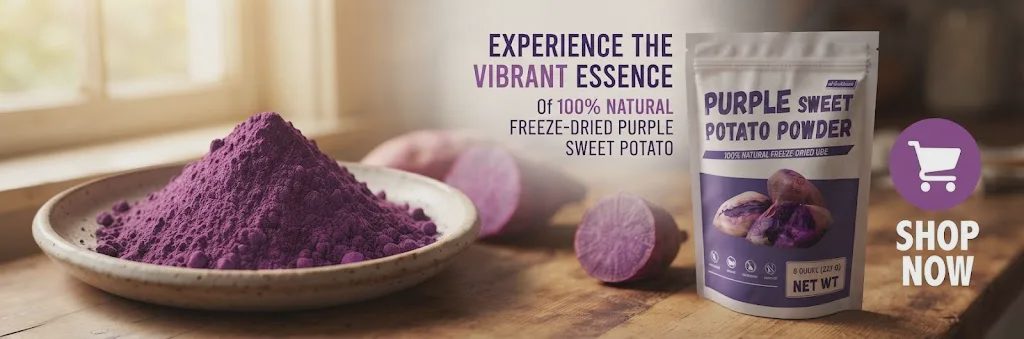
Purple sweet potato powder is made by drying and finely milling purple-fleshed sweet potatoes — the same root vegetable behind classic Filipino ube desserts, though technically a different plant from true ube (more on that distinction below). Once dried and ground, what's left is a fine, faintly sweet, mauve-to-violet powder that rehydrates and blends into batters, doughs, and drinks.
Where the Color Actually Comes From
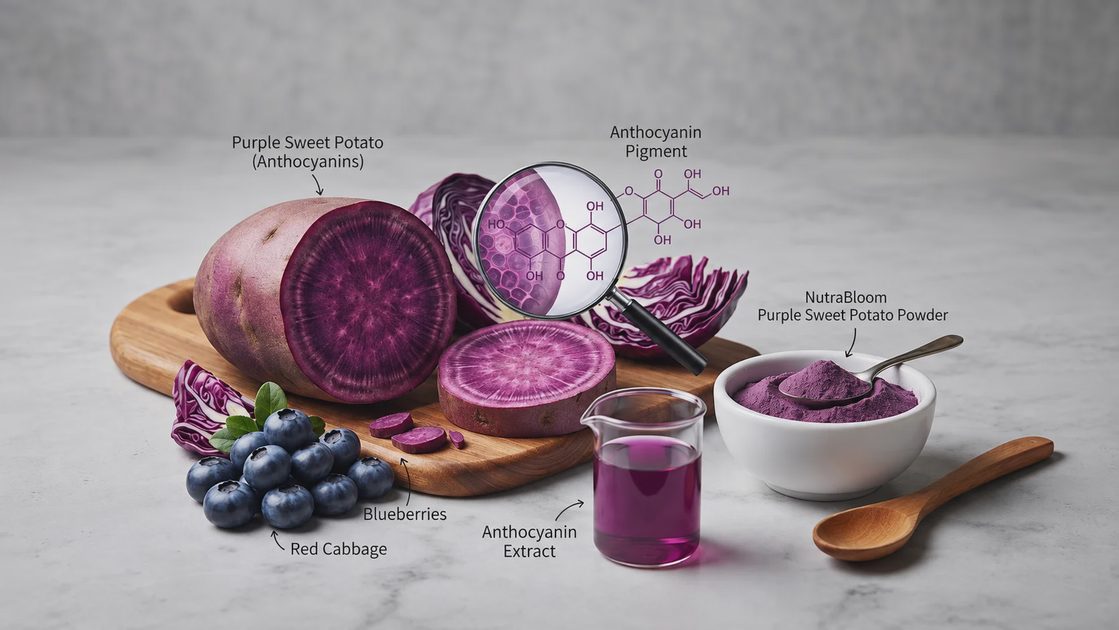
The pigment responsible for that deep purple hue is a group of antioxidants called anthocyanins — the same compound family that gives blueberries and red cabbage their color. Because the color comes from a whole-food pigment rather than a synthetic dye, it behaves a little differently in the oven: it mellows slightly with heat, landing somewhere between lavender and dusty plum rather than staying neon-bright.
How It's Different from Ube Extract
If you've baked with bottled ube flavoring before, know that this isn't a like-for-like swap. Ube extract is flavor-forward and often pre-sweetened; purple sweet potato powder is closer to a neutral colorant with a mild, earthy sweetness. I usually use the powder for color and a small amount of ube extract for flavor when I want that classic bakery-style ube taste. Think of them as two different tools that happen to share a shelf — one does color, one does flavor, and the best results usually come from using a little of both.
Why I Reach for Powder Over Fresh Purple Sweet Potato
I still cook with the fresh vegetable when I have time, but for weeknight baking it's rarely practical — steaming, peeling, and puréeing a purple sweet potato adds real moisture to a recipe, which means adjusting flour and liquid elsewhere to compensate. The powder sidesteps that entirely. It's concentrated, shelf-stable, and doesn't change your recipe's hydration the way a fresh purée would, which is exactly why I keep a bag on hand instead of buying fresh roots every time I want that color.
Why I Keep Reaching for the NutraBloom Bag
I've tried three or four brands of this powder over the last year, and a few things about NutraBloom's version specifically have kept it in my regular rotation.
The color is consistent. Batch to batch, the shade hasn't shifted the way a couple of cheaper brands did.
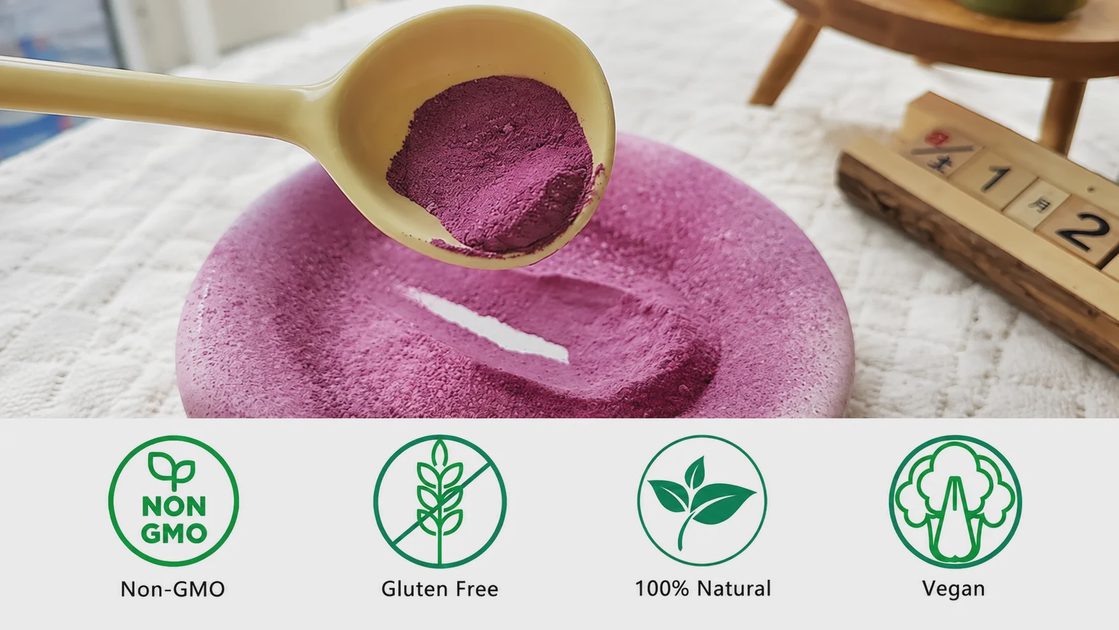
It's genuinely single-ingredient. The label lists purple sweet potato and nothing else — no maltodextrin, no anti-caking agents padding out the jar.
It's fine enough to dissolve without gritty streaks, which matters a lot in something like a glaze or a latte where texture is on full display.
It's shelf-stable. Unlike fresh purple sweet potato, which I have to use within a week, the powder has sat in my pantry for months without any change in color or smell.
A Quiet Nutritional Upside
I don't buy powders like this expecting a health transformation, but it's worth noting: purple sweet potato retains a meaningful amount of fiber and those anthocyanin antioxidants through the drying process. It's not a supplement, and I wouldn't market it as one — but as far as natural food dyes go, you're getting more nutritional value than you would from a bottle of Red 40. For anyone trying to cut back on synthetic dyes in their kids' food without giving up the fun, novelty colors that make baking exciting for them, this is one of the easier swaps I've made in my own kitchen.
How I Actually Use It in the Kitchen
This is the part that surprised me — I expected to use this exclusively for cake batter, but it's earned a spot in far more than desserts.
Baked goods: Swirled into cake batter, cookie dough, or pancake mix for color without altering texture much.
Lattes and steamed milk drinks: A half teaspoon whisked into hot milk makes a convincing purple "ube latte" base.
Frosting and glazes: Small amounts go a long way — start with 1/4 teaspoon per cup of frosting and build up.
Smoothies and overnight oats: Adds color and a very mild sweetness without any added sugar.
Savory experiments: I've folded a spoonful into mashed potatoes and dumpling dough just to see what would happen — it worked better than I expected.
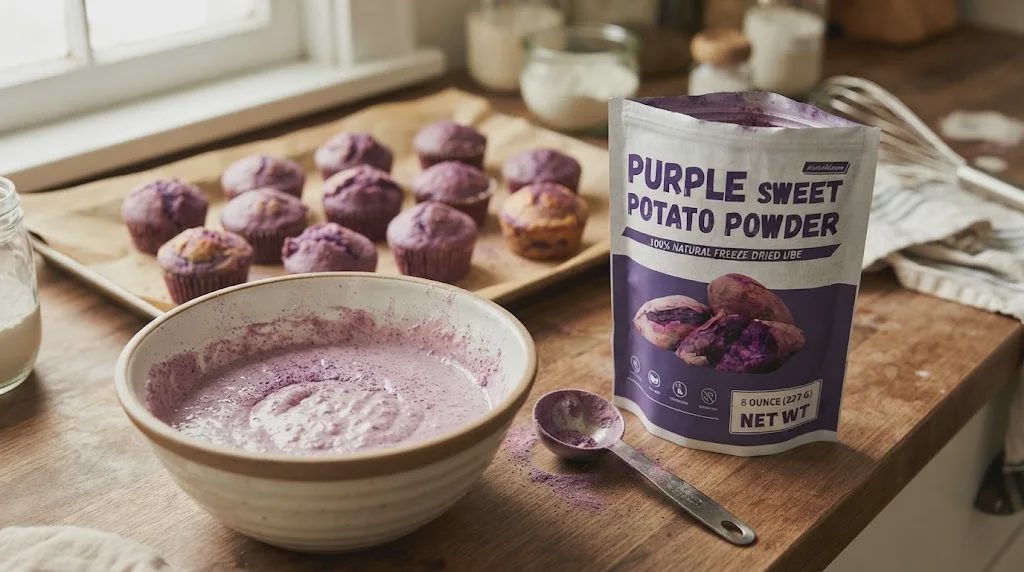
A note on dosage: this powder is potent. In my testing, more than about a tablespoon per standard cake recipe started to introduce a slightly chalky texture and a more assertive earthy flavor, which is where most of my early "too much powder" batches went wrong.
What to Know Before You Buy
No product is flawless, and I'd rather flag the real limitations than pretend this is perfect.
The color, while lovely, is genuinely more muted than artificial gel dye — if you're chasing a saturated, Barbie-pink-adjacent violet for a themed cake, you'll likely still need to lean on gel color as well. The flavor, though mild, is present; a few readers who tested a batch of frosting with me described it as "a little vegetal" when used at higher concentrations. And because it's a whole-food powder rather than a processed dye, humidity matters — if you don't reseal the bag tightly, it can clump within a few weeks in a humid kitchen. None of these are dealbreakers for me, but they're worth knowing going in rather than discovering mid-recipe.
Price, Where to Buy, and How It Ships
NutraBloom's Purple Sweet Potato Powder is sold on Amazon in an 8 oz resealable pouch. At the time of writing, it's priced at $9.99, with an on-page 10% coupon frequently bringing it down to around $8.99 — roughly $1.12 per ounce, which is competitive against most of the other purple sweet potato powders I've compared it to.
A few practical notes if you're ready to order:
Where to buy: It's listed directly on Amazon.com under the NutraBloom brand; I'd avoid third-party marketplace listings with unusually low prices, since ingredient sourcing can vary between sellers.
Subscribe & Save: Amazon offers a subscription option on this listing, which is worth setting up if you bake often — it knocks a bit more off the price on recurring orders.
Shipping: As an Amazon-fulfilled grocery item, it typically ships within 1–2 business days and qualifies for Prime shipping, so most Prime members will see 2-day delivery at checkout.
Amazon's Choice badge: This listing currently carries Amazon's Choice for its category, and shows over 1,000 recent purchases — a reasonable proxy for how many other home bakers are already using it.
If you bake purple-hued desserts even occasionally — ube cake, taro-adjacent frostings, novelty pancakes for kids — this is a low-risk way to try a natural colorant instead of committing to a full bottle of gel dye you might only use once or twice a year.
Prices and promotions reflect information available at the time of writing and are subject to change on Amazon's listing.



Letters
No letters yet — be the first to write.