When people search for tools on baking, they are usually looking for a simple answer: what do I actually need to make good desserts at home? My answer, after two decades of cakes, muffins, and experimental lower-sugar cookies, is shorter than most kitchen store displays. You need a few accurate, dependable tools, not every gadget with a pastel handle. The right equipment makes reduced-sugar baking more predictable because sugar affects moisture, browning, spread, and tenderness.
I am a registered dietitian and serious home baker, so I care about both the nutrition label and the slice on the plate. Cutting sugar without adjusting technique can produce dry cake or tough cookies. Good tools help you measure substitutions precisely and notice what the batter is doing before it reaches the oven. Less sugar. Same joy.
Tools on baking beginners should buy first
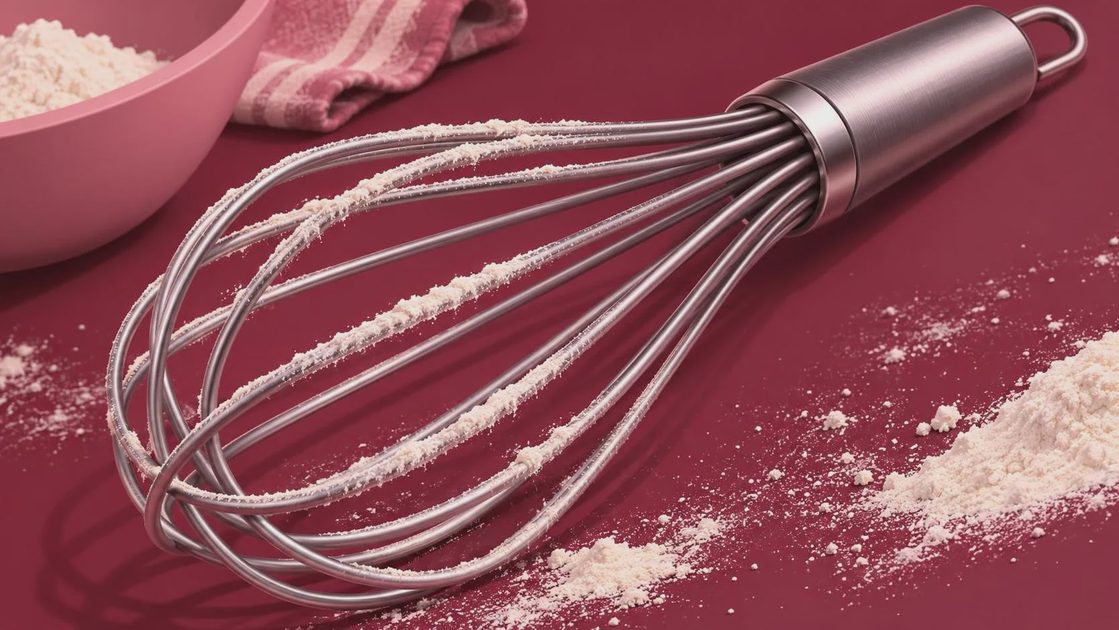
The most useful tools on baking are also the least glamorous. Start with a digital kitchen scale, measuring spoons, a set of dry measuring cups, a liquid measuring cup, two rimmed sheet pans, an eight-inch square pan, and a sturdy whisk. A digital scale often costs $15 to $35 and is the best investment in the group. Flour packed into a cup can vary substantially, while 120 grams remains 120 grams.
Measuring spoons matter when you use baking soda, baking powder, salt, vanilla, or a concentrated sweetener. A half-teaspoon too much baking soda can leave a bitter, soapy aftertaste. For liquid ingredients, use a clear cup with a spout and read it at eye level. That small habit prevents adding an extra tablespoon of milk or oil, which can change a batter's structure.
Choose pans with a light or medium-colored metal surface. Very dark pans absorb more heat and can over-brown reduced-sugar cakes before the center finishes. A silicone spatula, cooling rack, and inexpensive oven thermometer complete the starter kit. Your oven dial can be off by 25 degrees Fahrenheit, and that is enough to turn a tender loaf into a dry one.
Measuring tools on baking results depend on
When discussing tools on baking, I put the scale first because lower-sugar recipes have less room for error. Sugar is not only a sweetener; it adds bulk. If I replace part of it with a granulated sweetener, mashed banana, or yogurt, the amount of flour and liquid still needs to balance. A scale lets me repeat a successful batch instead of relying on a casually filled cup.
For flour, spoon it lightly into a dry cup and level the top if a recipe gives volume measurements. Do not scoop directly from a compressed flour bag. For brown sugar, follow the recipe's instruction about packing because that changes the amount considerably. If a recipe uses 100 grams of sugar and you are testing a 25 percent reduction, weigh 75 grams rather than guessing what three-quarters of a cup looks like.
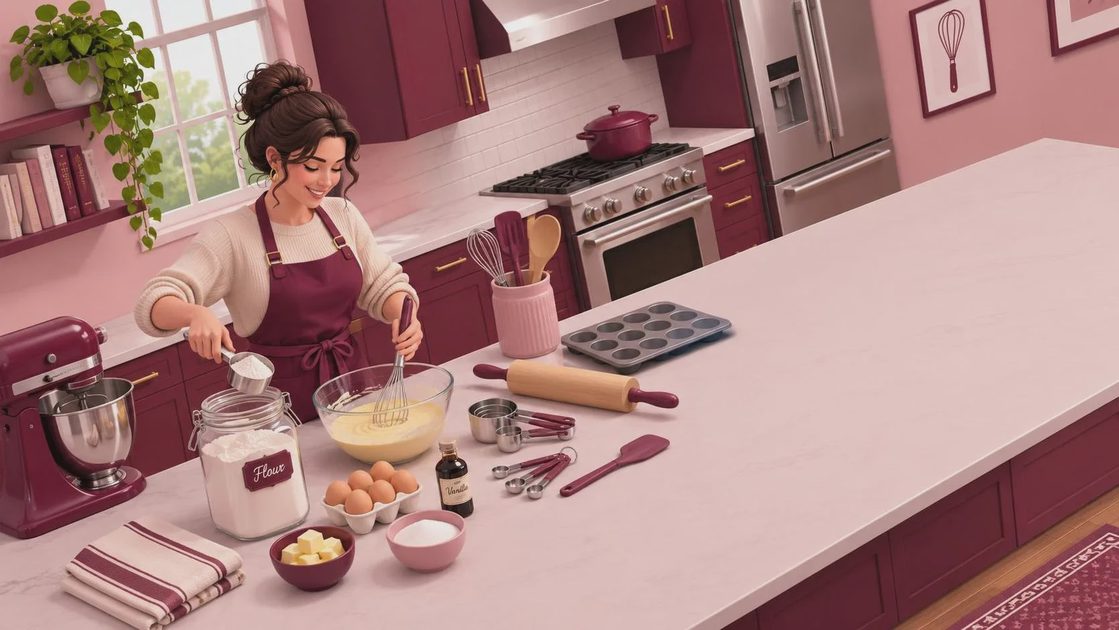
A set of small prep bowls is surprisingly valuable. Before mixing, weigh flour, cocoa, chopped nuts, and sweetener into separate containers. This is called mise en place, but you do not need a restaurant kitchen to use it. It prevents the classic mistake of forgetting salt or adding baking powder twice, especially when a toddler is asking for a taste of chocolate chips.
Mixing tools that protect texture
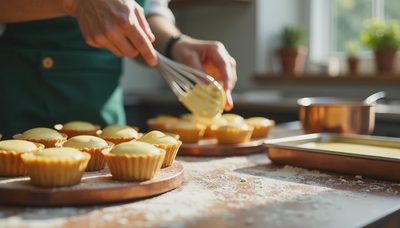
The best tools on baking are not always electric. A balloon whisk distributes leaveners through flour, while a flexible spatula folds dry ingredients into wet ingredients without overworking the gluten. For muffins, quick breads, and snack cakes, stop folding when a few small streaks of flour remain. The batter will finish combining as you scrape it into the pan.
A hand mixer is enough for most home recipes and usually costs $25 to $60. It creams butter and sugar more evenly than a fork, which helps trap air in a cake. If you reduce sugar, remember that there is less material to cream, so the mixture may look less fluffy. Beat softened butter and the remaining sugar for about two minutes, then add eggs one at a time. A stand mixer is convenient for large batches, but it is not required.
For lower-sugar baking, an immersion blender can help turn dates, cooked apples, or berries into a smooth puree. Use it thoughtfully: extra puree adds moisture, but it does not behave exactly like granulated sugar. I would rather blend a measured 1/3 cup of applesauce into a muffin batter than pour in an unmeasured amount and hope the crumb survives.
Tools on baking success in the oven
An oven thermometer is one of the most important tools on baking success depends on, even though it rarely appears in glossy recipe photos. Put it on the center rack and compare its reading with the oven setting after it preheats. If your oven runs hot, lower the setting or begin checking several minutes early. Do not automatically increase the temperature to make a pale, reduced-sugar cake brown; sugar reduction itself can limit browning.
A light-colored aluminum sheet pan helps cookies bake more evenly. Parchment paper reduces sticking and makes cleanup easier, but it does not replace greasing a cake pan when the recipe requires it. For loaf cakes, I use a strip of parchment with handles extending over the long sides. That makes it easier to lift the cooled loaf without cracking the edges.
An instant-read thermometer is useful for bread, custards, and some dense cakes, although visual cues still matter. A finished muffin should spring back lightly when pressed, and a skewer should show moist crumbs rather than wet batter. Let cakes cool in the pan for about 10 minutes before transferring them to a rack; moving them immediately can cause breakage.
Helpful upgrades worth the counter space
Once you bake regularly, a small offset spatula, cookie scoop, fine-mesh sieve, and bench scraper earn their places. A one-tablespoon cookie scoop creates uniform portions, so cookies finish at the same time. That matters when you are reducing sugar because smaller cookies can dry out quickly if left in the oven for the timing of a larger scoop.
A sieve makes cocoa powder and powdered sweetener easier to blend without lumps. An offset spatula spreads a thin layer of frosting, which lets a lower-sugar cake taste finished without a thick coating. My favorite upgrade is a quarter-sheet pan, roughly 9 by 13 inches, for roasting berries, baking small batches, and testing a recipe before committing to a full celebration cake.
When comparing tools on baking, consider storage and cleaning as much as price. A $20 scale you use every week is more useful than a $90 gadget that lives in a cabinet. Stainless steel mixing bowls, heat-safe spatulas, and washable parchment alternatives can last for years when handled properly.
A practical setup for your next recipe
Before shopping for more tools on baking projects, choose one recipe and audit what it asks you to do. If it calls for creaming butter, prioritize a mixer. If it uses whipped egg whites, choose a clean metal bowl and a reliable whisk. If it is a sheet cake, spend money on an oven thermometer and the correct pan before buying decorative equipment.
My usual setup is a scale beside the mixing bowl, prep bowls arranged from dry ingredients to wet ingredients, and the oven preheating with its thermometer already inside. I weigh a reduced-sugar formula, record the exact sweetener and pan size, then write down the color, texture, and cooling time. That small record turns a lucky bake into a repeatable recipe.
Good tools will not make every sugar swap successful, but they give you useful information instead of mystery. Start with accuracy, add equipment only when a recipe demands it, and pay attention to texture at every stage. With a scale, thermometer, dependable pans, and a little patience, tools on baking become a way to make desserts that are lighter on sugar and still worth sharing.

Letters
No letters yet — be the first to write.