This levain cookies recipe gives you the tall, craggy cookie people love from a bakery case, but with a more reasonable amount of sugar for a homemade dessert. The centers stay soft and fudgy, the edges develop a gentle crispness, and toasted walnuts add enough flavor that you do not need an avalanche of chocolate. I tested this version with my brutally honest family tasters, and nobody asked where the missing sugar went. Less sugar. Same joy.
The secret is not simply dumping half the sugar from a classic formula. Sugar affects browning, spread, moisture, and tenderness, so removing it without adjusting the dough can produce dry, pale hockey pucks. This version uses brown sugar for moisture and caramel flavor, a modest amount of granulated sugar for crisp edges, and a long chill to build the thick shape.
Ingredients for the best texture
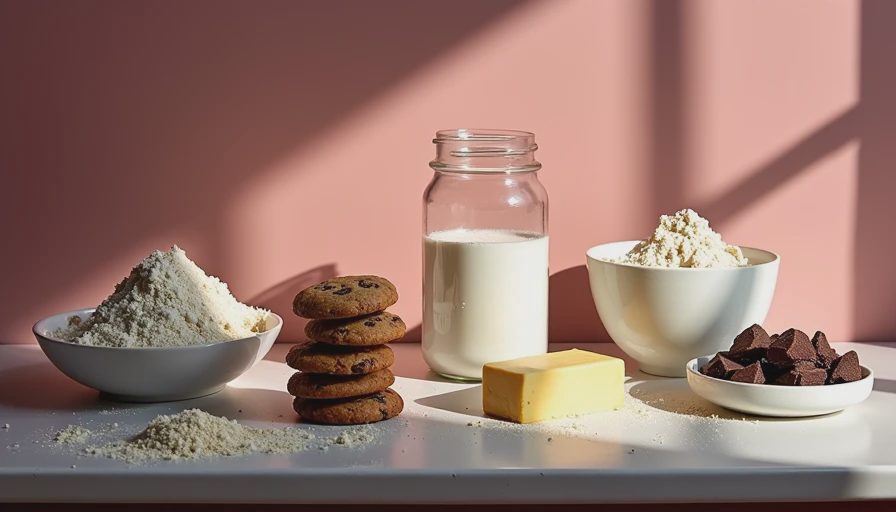
You will need 1 cup, or 226 grams, unsalted butter, softened but not greasy; 140 grams packed light brown sugar; 50 grams granulated sugar; 2 large eggs; 2 teaspoons vanilla extract; 300 grams all-purpose flour; 35 grams bread flour; 1 tablespoon cornstarch; 1 teaspoon baking soda; 3/4 teaspoon kosher salt; 170 grams semisweet chocolate chunks; and 100 grams toasted walnuts, roughly chopped.
The total sugar is intentionally lower than many oversized bakery-cookie formulas. Brown sugar keeps the centers moist, while the small amount of white sugar helps the outside set. Do not replace the brown sugar with maple syrup or honey in equal volume. Liquid sweeteners change the flour balance and can make these cookies spread into thin puddles.
For chocolate, I like Ghirardelli or Guittard semisweet wafers because they melt into broad pockets. Nestle Toll House chunks also work well. If you prefer a less sweet bite, use 60% to 72% dark chocolate, but do not eliminate the chocolate entirely; its bitterness balances the reduced-sugar dough.
How to make this levain cookies recipe
First, toast the walnuts in a dry skillet over medium-low heat for four to six minutes, stirring often. Let them cool completely. Warm nuts release oil into the dough, and adding them hot can soften the butter enough to cause excessive spreading.
Beat the butter, brown sugar, and granulated sugar for about two minutes. You are not trying to make a pale, fluffy cake batter; just blend the ingredients until smooth. Add the eggs one at a time, then mix in the vanilla. Scrape the bowl so no firm butter remains hidden at the bottom.
In a separate bowl, whisk the all-purpose flour, bread flour, cornstarch, baking soda, and salt. Add the dry mixture to the butter mixture in two additions, mixing on low only until a few flour streaks remain. Fold in the chocolate and cooled walnuts by hand. Overmixing develops gluten and makes the finished cookies tougher.
Portion the dough into eight large mounds, about 145 grams each. Shape each mound taller than it is wide, almost like a rough cylinder. That shape helps the center remain thick while the edges bake. Place the portions on a parchment-lined tray, cover, and refrigerate for at least two hours. Overnight chilling gives the deepest flavor and most controlled spread.
Heat the oven to 400 degrees Fahrenheit. Arrange two or three dough portions on a parchment-lined sheet, leaving at least four inches between them. Bake for 11 to 13 minutes, rotating the pan halfway through. The edges should look set and lightly golden, while the centers still appear slightly underdone. Cool the cookies on the pan for 15 minutes before moving them.
Why the low-sugar changes work
A traditional levain cookies recipe often depends on a heavy sugar load for dramatic browning and a soft, almost candy-like center. Here, the flour blend and chilling time take over some of that structural work. Bread flour contributes extra protein, which helps the cookie stand tall. Cornstarch softens the bite without adding sweetness. Brown sugar supplies moisture because molasses attracts and holds water.
This is also why I do not recommend cutting the sugar below the amounts listed. You can reduce sweetness, but at some point the cookie loses color, spread, and tenderness. The result is not healthier in a magical sense; it is simply less enjoyable. A large cookie still contains concentrated flour, butter, and sugar, so treat it as dessert rather than a free pass. For a smaller everyday portion, divide each dough mound into 70-gram balls and bake for about nine minutes.
If you are baking for someone with diabetes or prediabetes, portion size and the whole meal matter. Sugar reduction alone does not make a cookie carbohydrate-free, and sugar alcohols are not a universal solution. Some cause digestive discomfort, while others do not provide the same moisture or browning. I prefer a smaller, genuinely satisfying cookie over a giant “sugar-free” cookie that tastes like cardboard.

Troubleshooting thick, bakery-style cookies
If your cookies spread too much, the butter was probably too warm, the dough was not chilled long enough, or your flour was under-measured. Weighing flour is the most reliable fix. If you do not have a scale, spoon flour into a measuring cup and level it instead of scooping directly from the bag.
If the cookies stay domed and seem doughy after cooling, flatten the next batch slightly and add one or two minutes to the bake. Ovens vary, and dark pans brown bottoms faster than light aluminum pans. An inexpensive oven thermometer can reveal a surprisingly large temperature difference.
If the edges become hard, pull the cookies earlier. They continue cooking on the hot sheet after leaving the oven. For the signature contrast, judge doneness by the center rather than waiting for the entire cookie to look finished. A levain cookies recipe should look a little too soft when it first comes out.
If the dough is difficult to scoop, let it sit at room temperature for five minutes. Do not microwave a whole bowl of chilled dough; melted pockets of butter lead to uneven spreading. Scoop first, then chill the portions on a tray.
Storage, freezing, and serving
Fresh cookies keep well in an airtight container for three days. Place parchment between layers so the chocolate does not smear across every surface. To refresh one, microwave it for eight to 12 seconds. That restores a soft center without turning the edges rubbery.
For make-ahead baking, freeze shaped dough portions on a tray until firm, then transfer them to a freezer bag. Label the bag with the oven temperature and baking time. Bake from frozen at 400 degrees for about 14 to 16 minutes, adding time only if the centers remain completely wet. Frozen dough is especially useful when you want one warm cookie after dinner instead of an entire batch on the counter.
Serve these with coffee, cold milk, or a scoop of plain vanilla ice cream. The cookie is sweet, but the toasted nuts and darker chocolate keep it from tasting one-dimensional. This levain cookies recipe makes eight generous portions, so sharing one is a practical way to enjoy the bakery experience without turning dessert into an all-day sugar event.
The best levain cookies recipe is not the one with the longest ingredient list or the most sugar. It is the one that gives you a deeply satisfying bite, clear instructions, and enough control to bake it again next weekend. Weigh the ingredients, chill the dough, pull the cookies while the centers still look soft, and let the hot pan finish the job. That small amount of patience delivers tall cookies with crisp edges and gooey centers—less sugar, same joy.



Letters
No letters yet — be the first to write.