Baking powder for banana bread is useful when you want a soft, gently risen loaf without relying entirely on the acidity of your bananas. The right amount creates a tender crumb and rounded top; too much can leave a bitter, chemical aftertaste and a loaf that rises quickly before collapsing. After years of testing reduced-sugar bakes, I have found that the leavener matters, but so do banana ripeness, flour measurement, and mixing technique.
For a standard 9-by-5-inch loaf made with about 2 cups of all-purpose flour, start with 1 1/2 teaspoons of baking powder. That amount gives the batter enough lift without overpowering the banana flavor. If your recipe also includes baking soda, the total leavening may be higher, but the two ingredients are not interchangeable in every formula. Understanding what each one does will help you adjust a recipe confidently instead of guessing.
Baking Powder Versus Baking Soda
Baking powder contains both a base and powdered acids. When it becomes wet and warm, it releases carbon dioxide bubbles that expand in the oven. Most grocery-store baking powder is double-acting, meaning it reacts once when mixed and again during baking. That makes it a dependable choice for banana bread, especially when the batter does not contain much acidic liquid.
Baking soda is pure sodium bicarbonate. It needs an acid, such as buttermilk, yogurt, sour cream, brown sugar, molasses, or naturally acidic mashed banana, to produce carbon dioxide. It also encourages browning and can make the flavor seem slightly fuller. However, excess soda is easy to taste. A loaf with too much may have a soapy edge, yellow-brown color, or an unpleasantly coarse texture.
If a recipe calls for both, do not automatically remove one. Baking powder supplies reliable lift, while a small amount of soda can neutralize acidity and improve color. For a simple loaf with ripe bananas, 1 1/2 teaspoons of baking powder plus 1/4 teaspoon of baking soda is a sensible starting point. The exact balance depends on the amount of yogurt, buttermilk, or other acidic ingredients.
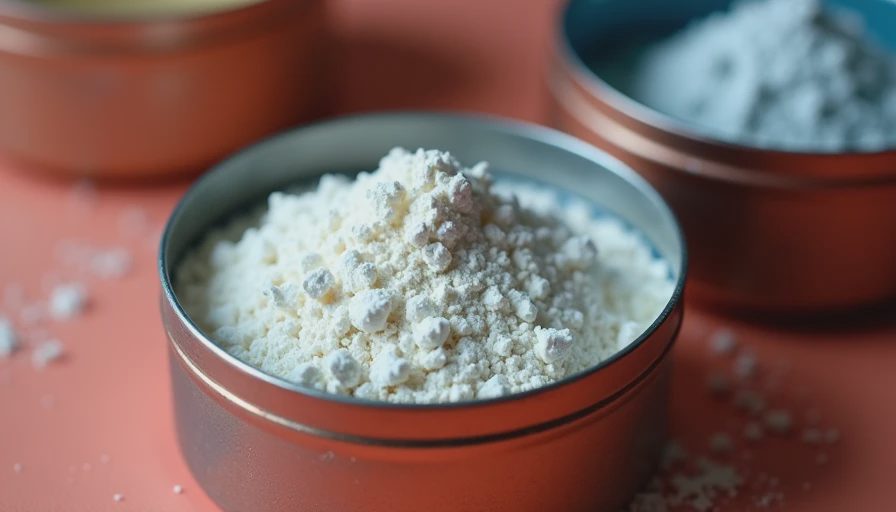
How Much Baking Powder for Banana Bread?
The practical rule is about 1 teaspoon of baking powder per cup of flour, with some flexibility based on the rest of the recipe. A loaf containing 1 1/2 cups of flour may need 1 1/2 teaspoons. A larger loaf made with 2 1/2 cups may use 2 to 2 1/2 teaspoons. More is not automatically better because too much gas can stretch the structure beyond its strength.
Measure the powder with a dry measuring spoon, then level it with the straight edge of a knife. Do not scoop a heaping spoonful unless the recipe specifically says to do so. Check the expiration date, too. To test older baking powder, stir 1 teaspoon into a small cup of hot water. It should fizz immediately and actively. Weak bubbling means your loaf may bake up dense.
Pan size changes the result. A deep 9-by-5-inch pan holds a thicker layer of batter and may need a longer bake, while an 8 1/2-by-4 1/2-inch pan creates a taller loaf from the same quantity. Fill either pan no more than two-thirds full. If you have extra batter, bake it in a muffin tin rather than forcing everything into one pan.
Adjusting a Banana Bread Recipe for Less Sugar
Ripe bananas bring sweetness, moisture, and acidity, but they do not replace every function of granulated sugar. Sugar helps retain water, tenderizes the crumb, supports browning, and delays gluten formation. If you cut it sharply, the loaf can become less moist and slightly bready even when the leavener is correct.
For a typical recipe using 3/4 cup sugar, I often reduce it to 1/2 cup when using three very ripe bananas. That is enough to lower sweetness without making the texture noticeably dry. If you reduce sugar to 1/3 cup, add flavor and moisture with 2 tablespoons of plain Greek yogurt, unsweetened applesauce, or an extra tablespoon of mashed banana. These additions can also affect acidity, so keep the baking soda modest.
Maple syrup and honey are not one-for-one dry sugar replacements. They add liquid and can make the batter loose. If replacing 1/4 cup of sugar with 3 tablespoons of maple syrup, reduce another liquid ingredient by roughly 1 tablespoon and expect a darker, softer crust. The result will not taste exactly like the original, but it can be delicious: less sugar, same joy.
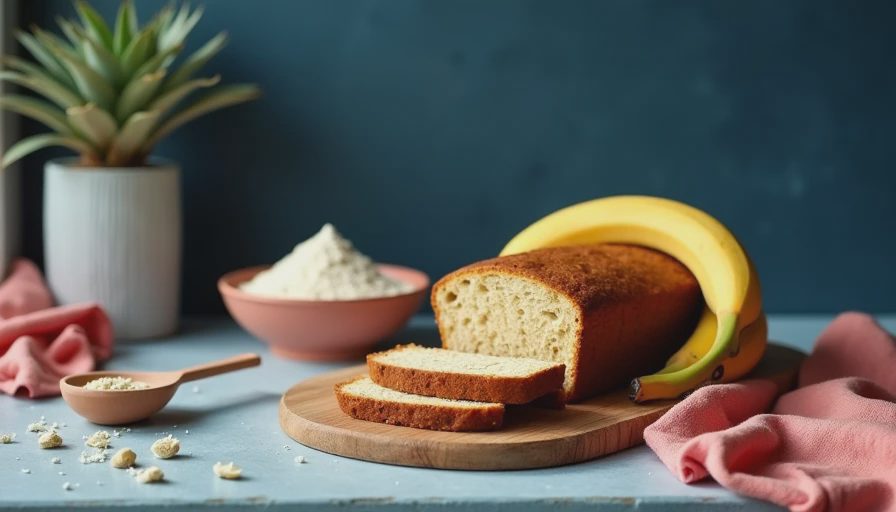
A Reliable Mixing Method
Start with bananas that are heavily speckled or mostly brown. They mash easily and contribute more pronounced flavor than firm yellow fruit. Mash them with a fork until only small lumps remain. A completely smooth puree is not required; tiny pieces create pleasant pockets of banana in the finished loaf.
Whisk the flour, baking powder, baking soda if using, salt, and spices in one bowl. In another bowl, combine the mashed bananas, eggs, melted butter or neutral oil, vanilla, and sugar. Add the dry ingredients to the wet ingredients and fold with a spatula just until no dry streaks remain. Ten to fifteen deliberate folds are usually enough.
Overmixing is a more common cause of tough banana bread than insufficient leavening. Flour develops gluten as it is hydrated and stirred, and a long mixing session creates a chewy, tight crumb. Scrape the corners of the bowl, transfer the batter immediately, and bake in a preheated oven. Delaying the pan lets the chemical reaction begin before the loaf has the heat needed to set its structure.
Bake at 350 degrees Fahrenheit for approximately 50 to 65 minutes, depending on pan size and moisture. The center should spring back lightly, and a toothpick should come out with a few moist crumbs rather than wet batter. If the top browns early, tent it loosely with foil during the final 15 minutes.
Troubleshooting Common Results
A dense loaf can result from expired leavener, too much banana for the flour, an undersized pan, or excessive mixing. If the center is gummy, the bread may simply need more time; banana-heavy batters stay moist long after the edges look finished. Let the loaf cool in the pan for 15 minutes, then move it to a rack so steam does not soften the bottom.
A loaf that tastes bitter or soapy probably contains too much baking soda or baking powder. Reduce the amount rather than adding extra sugar to hide the flavor. A loaf that rises beautifully and then sinks may have too much leavener, an underbaked center, or a door opened too early. Wait until at least 40 minutes have passed before checking.
If you want a slightly cakier crumb, use baking powder for banana bread with a little yogurt and oil. If you prefer a darker crust and more toasted flavor, use a small amount of baking soda alongside it. Neither approach is universally correct; the best formula matches your bananas, acidic ingredients, pan, and preferred texture.
My Go-To Formula
For one standard loaf, combine 2 cups all-purpose flour, 1 1/2 teaspoons baking powder, 1/4 teaspoon baking soda, 1/2 teaspoon salt, three very ripe bananas, two eggs, 1/2 cup sugar, 1/3 cup melted butter or oil, and 1 teaspoon vanilla. Cinnamon is optional, but 1 teaspoon adds warmth without covering up the fruit.
This formula is intentionally moderate in sweetness. It works for breakfast, an afternoon snack, or a family dessert without turning the loaf into cake disguised as bread. Add chopped walnuts or pecans if you like, but keep additions near 3/4 cup so the batter still rises evenly.
When in doubt, choose baking powder for banana bread as the primary leavener, measure it carefully, and let the bananas provide the main flavor. A few thoughtful adjustments produce a loaf that is moist, fragrant, and genuinely satisfying without a sugar overload.

Letters
No letters yet — be the first to write.